 Taco Field Notes
What Makes a Street Taco a Street Taco?
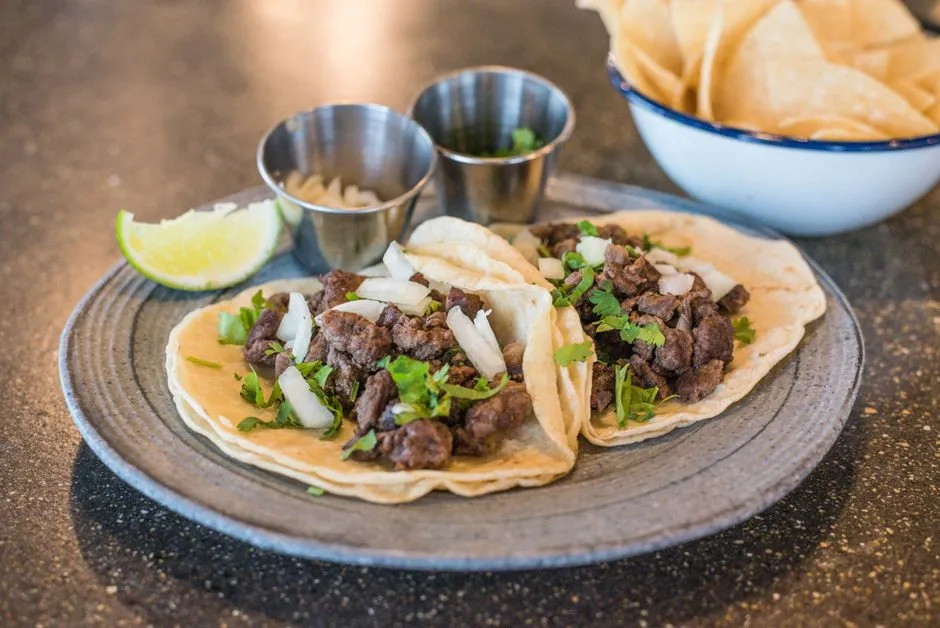
- A street taco is a format, not one fixed recipe
- Begin with the broad definition of a taco
- The tortilla is part of the taco, not its packaging
- Why are many street tacos small?
- Why do some street tacos use two tortillas?
- One filling should lead, but mixed tacos are real tacos
- Toppings are an editing decision
- Street taco versus a larger plated taco
- Build a 12-taco calibration batch at home
- Keep the food-safety rules separate from style
- The form works because the parts agree
A street taco is a format, not one fixed recipe
A street taco is usually a warm, foldable tortilla holding a focused portion of filling, finished with only the salsa and garnishes that help that filling. It is often small enough to eat in a few bites and may use one or two tortillas. Those are useful patterns, not laws: Mexican tacos include corn and flour tortillas, meat and vegetable fillings, single and mixed proteins, spare garnishes and more elaborate regional forms.
The word “street” mainly describes how the taco is sold and eaten: prepared quickly, assembled to order, and built to work in the hand. It does not identify one official tortilla diameter, topping list, or meat. At home, the best way to copy the form is to make each component do one job and keep the proportions small enough for the tortilla to fold.
Begin with the broad definition of a taco
The Dictionary of Mexican Spanish from El Colegio de México defines a taco as a corn or flour tortilla folded or rolled around added food, with examples including beans, quelites, salsa, and meat. That is a sturdier definition than the familiar image of chopped meat, onion, and cilantro because it leaves room for the range that actually exists.
It also dismantles two common myths at once. A taco does not have to use corn, and it does not have to contain meat. “Street taco” narrows the service style more than the filling category.
Mexican cuisine is not a single national template waiting to be reduced to four toppings. UNESCO describes traditional Mexican cuisine as living heritage, rooted in community, territory, techniques, and social bonds. Maize, beans, and chile form a foundational triad, but cooks and regions turn those ingredients into many distinct foods.
So this guide uses a practical home-kitchen model. It explains why the compact tortilla, focused filling, restrained garnish, and fast assembly work together. It does not declare every taco outside that model incorrect.
The tortilla is part of the taco, not its packaging
A street-style taco begins with a tortilla that tastes good, bends cleanly, and supports the filling. Corn is common and culturally central, but flour tortillas also belong to Mexican taco traditions. El Colegio de México’s definition of tortilla describes the corn tortilla as fundamental to Mexican cooking and recognizes the wheat-flour tortilla as the same form made with a different flour.
Choose corn or flour for the taco in front of you:
- Corn tortillas bring a clear maize flavor, a tender chew, and a modest size that suits chopped or braised fillings.
- Flour tortillas are often more elastic and can suit grilled meat, beans, cheese, or regional styles in which wheat tortillas are established.
- Fresh, local, or nixtamalized tortillas can offer distinctive maize flavor, but read the ingredients and judge the actual tortilla rather than using one marketing word as a quality guarantee.
Fundación Tortilla’s report on a cooperative taquería in Cholula shows how specific the relationship can be: its menu uses locally grown native maize in multiple colors and includes asada, mixed-meat campechano, seafood, quelites, maguey flower, and seasonal fillings. The Cholula account is a useful reminder that tortilla, place, producer, filling, and season can all matter.
At home, warm the tortilla until pliable and lightly toasted, then keep it covered. A cold tortilla often cracks before the filling gets a fair trial. Our guide to warming corn tortillas without cracking gives skillet, microwave, and oven methods.
Why are many street tacos small?
Small tortillas support the way many tacos are served: quickly, in multiples, and with enough structure to eat by hand. A compact taco keeps the filling close to the fold and lets a diner try more than one filling or salsa without turning each choice into a full plate.
Small is still relative. The Mexican Spanish dictionary describes a standard corn tortilla as approximately 15 centimetres in diameter, while particular taquerías use smaller tortillas. Larousse’s account of tacos de suadero specifically notes small tortillas taqueras filled with chopped suadero and served with onion, cilantro, and chile de árbol salsa.
That is evidence for one familiar street-taco pattern, not a minimum-size regulation. The same Mexican dictionary distinguishes a taco placero as generally larger or more generously filled than an ordinary taco. Fried tacos, tacos de canasta, seafood tacos, and regional flour-tortilla tacos can follow different proportions.
For home cooking, use the hand test: a filled taco should fold without forcing the edges together, and the first bite should include tortilla, filling, and garnish. If the center forms a tall mound or the tortilla cannot bend, make another taco rather than asking one tortilla to become a serving bowl.
Why do some street tacos use two tortillas?
Two tortillas provide practical reinforcement. They help when the tortillas are thin, the filling is juicy, or the taco has to wait briefly between the griddle and the first bite. The lower tortilla can also catch pieces and liquid that leave the upper one.
There is no need to turn that useful arrangement into a universal origin story. Some taquerías double; others serve one tortilla that is thick or strong enough on its own. Some diners separate the pair into two smaller tacos, while others eat them together. The right choice depends on the tortilla and filling.
Use one tortilla when it is fresh, flexible, and strong enough to hold a modest portion. Use two when:
- the first tortilla shows a weak spot after warming;
- a braised or chopped filling releases noticeable juice;
- the tortilla is especially thin;
- the filled taco must travel from kitchen to table; or
- you prefer the extra maize flavor and chew.
Doubling does not rescue a cold, dried, or badly cracked tortilla. Warm it properly first. It also changes the ratio: two tortillas around the same small spoonful of filling make maize more prominent. That may be exactly right, or it may mute a delicate filling.
One filling should lead, but mixed tacos are real tacos
The most useful street-taco build has a clear center. That might be suadero, carnitas, asada, mushrooms, potato, beans, fish, nopales, or a prepared guisado. Naming the taco by its leading filling tells the diner what to expect and helps the cook choose a salsa that fits.
That is a design principle, not a single-protein rule. El Colegio de México defines a taco campechano as one combining two or more meats, commonly bistec or suadero with longaniza. The Cholula menu documented by Fundación Tortilla places a campechano beside vegetable, seafood, asada, and seasonal tacos. Mixture and variety are part of the record.
What makes a taco lose focus is not the mere presence of two ingredients. It is the absence of hierarchy. If grilled beef, beans, rice, cheese, lettuce, tomato, crema, salsa, and guacamole all arrive in equal volumes on a small tortilla, nothing leads and the fold fails.
For a street-style build, decide which component supplies the main flavor and bulk. Let the others season, sharpen, cool, or add texture. The tortilla still needs room to close around the answer.
Toppings are an editing decision
Onion, cilantro, salsa, and lime form a familiar finish because each contributes something distinct: crunch, herbal freshness, heat or roasted depth, and acidity. The Larousse suadero entry documents onion, cilantro, and chile de árbol salsa for that particular taco. It does not establish them as compulsory on every filling.
A fish taco may need cabbage. A rich carnitas taco may benefit from sharp salsa and pickled onion. A vegetable taco may want a toasted seed or a creamy element. Some tacos arrive with guacamole, nopales, cheese, or cooked onions. The question is not whether a topping appears on a generic checklist. It is whether the bite needs what that topping contributes.
Use this short sequence:
- Taste the filling by itself.
- Add one salsa and taste again.
- Add a fresh garnish if the bite needs lift or texture.
- Add lime only if more acidity helps.
- Stop before the filling becomes anonymous.
Our street taco topping guide goes deeper into moisture, richness, heat, and texture. The central lesson is restraint with a reason, not restraint for display.
Street taco versus a larger plated taco
“Regular taco” is not a precise opposing category. People may use it to mean a larger restaurant taco, a home taco, a crisp-shell taco, or whatever their local menu treats as standard. Compare observable features instead of arguing over the label.
| Feature | Compact street-style build | Larger or plated build |
|---|---|---|
| Tortilla | Often small and soft; one or two | May be larger, soft, crisp, fried, or knife-and-fork sized |
| Filling | Modest portion with one clear lead | More room for layered fillings and sides |
| Garnish | Usually edited for quick assembly | Can support more components and presentation |
| Service | Built and eaten immediately | May travel, sit on a plate, or arrive as part of a composed meal |
| Best test | Folds and eats cleanly in a few bites | Delivers the intended style without pretending to be the smaller format |
One format is not more legitimate simply because it is smaller. A crisp taco and a soft taquería taco solve different textural problems. A large taco placero and a tiny suadero taco can both sit comfortably inside Mexican taco culture.
Build a 12-taco calibration batch at home
The easiest way to understand the proportions is to build a first round, taste it, and adjust before serving the whole tray. For 12 compact tacos, start with:
- 12 small warm tortillas, or 24 if using two per taco;
- 360 g cooked filling, which gives 30 g per taco;
- 60 g finely chopped onion, which gives 5 g per taco;
- 15 g chopped cilantro, about 1.25 g per taco;
- 120 mL salsa, which gives 10 mL or 2 teaspoons per taco; and
- 2 limes, cut into wedges.
These are assembly coordinates, not a traditional standard. A fluffy vegetable filling and dense chopped meat occupy different volumes. Begin with 30 grams, fold the tortilla, and add only what it can carry without tearing or losing the filling on the first bite.
Set out one filling, one salsa, onion, cilantro, and lime. Warm six tortillas, stack them under a clean towel, and build the first taco. Taste it while hot. If the tortilla disappears, reduce filling or use a second tortilla. If the taco feels dry, add a little salsa. If it tastes heavy, add lime. If every bite tastes mainly of salsa, use less.
Then warm the second stack and serve. Small batches keep the tortillas pliable and the filling hot. They also make correction possible before 12 identical mistakes reach the table.
Keep the food-safety rules separate from style
Taco form does not change safe cooking temperatures. FoodSafety.gov’s current minimum-temperature chart specifies 71°C/160°F for ground beef, pork, lamb, and sausage; 74°C/165°F for poultry; and 63°C/145°F followed by a three-minute rest for whole beef, pork, lamb, veal, goat, and bison steaks, roasts, or chops.
Check the thickest part with a food thermometer before chopping or serving. Keep raw-meat boards, knives, plates, and marinades away from cooked filling and ready-to-eat garnishes. Refrigerate perishable leftovers promptly and reheat leftovers to 74°C/165°F.
Serve salsa and chopped produce from clean containers. If a taco bar will remain out for an extended meal, keep hot filling hot and cold perishable toppings cold according to current food-safety guidance. These controls are not optional details beside an otherwise successful taco.
The form works because the parts agree
A useful definition of a street taco is modest: a warm foldable tortilla, a focused filling, purposeful garnish, and immediate service. Small tortillas and double layers are common because they can make that handheld structure work, not because every taquero signed the same rulebook.
Start with the tortilla. Give one filling the lead. Add salsa and garnish for specific reasons. Keep the taco small enough to fold and eat while warm. Then name the style you actually made, with room for the corn, flour, vegetables, mixed meats, regional practice, and personal skill that make Mexican tacos far more interesting than a single formula.
An independent publication. Not affiliated with any prior owner of this domain.
Frequently asked questions
Why are street tacos usually small?
A compact tortilla keeps the filling close to the fold, is easy to eat by hand, and lets a diner order several tacos or try different fillings. Small is not mandatory: Mexican taco forms include larger and more generously filled tacos. The practical test is whether the tortilla folds and delivers a balanced first bite.
Why do street tacos sometimes have two tortillas?
The second tortilla reinforces a thin or soft first tortilla and can catch filling or juices that escape. Some taquerías use two and others use one sturdy tortilla. Double when the tortilla or wet filling needs support, not because every street taco must follow a two-tortilla rule.
Are street tacos always made with corn tortillas?
No. Corn tortillas are common and maize is foundational to Mexican cuisine, but the Dictionary of Mexican Spanish defines tacos as food folded or rolled in corn or flour tortillas. Choose the tortilla that belongs to the style and filling you are making rather than treating flour as automatically disqualifying.
What toppings go on a street taco?
Finely chopped onion, cilantro, salsa, and lime are a familiar starting point, especially for many chopped-meat tacos. They are not compulsory on every taco. Choose toppings for a job—freshness, acidity, heat, richness, or texture—and stop while the leading filling remains recognizable.
Can a street taco contain more than one meat?
Yes. A focused filling is useful, but a single-protein rule would erase documented tacos such as the campechano, which combines two or more meats. What matters structurally is that the filling remains coherent and modest enough for the tortilla, salsa, and garnish to work together.